

Author: Josh Blake

2025 Annual Report
Take a look at Ucross’ 2025 Annual Report, complete with student stories, research projects, impacts, and more!

Researching with the Blackfoot Challenge has inspired my new thoughts about nature conservation and strengthened my problem-solving skills – Owen Luo
During the 2025–2026 academic year, I am working with fellow Ucross researcher Salma Huque to evaluate the economic benefits of the Blackfoot Challenge’s public and private investments in nature conservation within the Blackfoot watershed. The Blackfoot Challenge (BC) is a conservation nonprofit based in Western Montana that collaborates with local landowners to advance long-term stewardship Read more about Researching with the Blackfoot Challenge has inspired my new thoughts about nature conservation and strengthened my problem-solving skills – Owen Luo[…]

Researching Grasshoppers Makes Me a Better (Prospective) Lawyer – Alexia Zolenski
I never wanted to be a lawyer. It’s true. To me, the best lawyers typically don’t want to be lawyers. They want to effectuate some sort of change, see the law as a tool to do so, and if you’re like me, find yourself in Torts, tapping your Chaco on the ground, looking out the Read more about Researching Grasshoppers Makes Me a Better (Prospective) Lawyer – Alexia Zolenski[…]
Limiting that One Bad Year – Jackson Newman
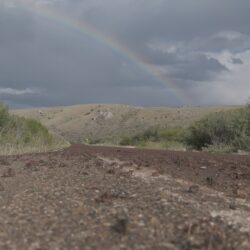
Grassland conservation depends on ranching. So, with the number of ranches dwindling across the West, and more land being developed every day, how do we support the sustainability of existing ranching operations? In my mind, sustainability in ranching is a two-sided coin. On one side, we must work to fix the market dynamics that make Read more about Limiting that One Bad Year – Jackson Newman[…]

Coalition Building in the Blackfoot Watershed – Salma Huque
My research project this academic year, in collaboration with fellow Ucross researcher Owen Luo, is to estimate the economic benefits of the Blackfoot Challenge’s public-private partnerships on the local community. The Blackfoot Challenge is a Western Montana nonprofit working with private landowners to undertake collaborative conservation and stewardship solutions. In contrast to the physical conservation Read more about Coalition Building in the Blackfoot Watershed – Salma Huque[…]
Investigating Producer Responses to Grasshopper Outbreaks on Western Rangelands
UHPSI research assistants, Alexia Zolenski and Jack Newman, are investigating producer (farm and ranch) responses to grasshopper and Mormon cricket outbreaks in central and eastern Montana and eastern Oregon. Every year, grasshopper and Mormon cricket outbreaks cause significant economic damage and defoliation to western rangelands. Simultaneously, the strategies employed in managing these outbreaks, from pesticide Read more about Investigating Producer Responses to Grasshopper Outbreaks on Western Rangelands[…]

Assessing Economic Benefits of Natural Resource Stewardship Investments in Western Montana
UHPSI Research Assistants Owen Luo and Salma Huque are working with the Blackfoot Challenge to quantify the economic benefits of their conservation investments in the local community. The Blackfoot Challenge is a non-profit based in Ovando, Montana that brings together private landowners and public agencies to protect natural resources in the Blackfoot River Watershed. Their Read more about Assessing Economic Benefits of Natural Resource Stewardship Investments in Western Montana[…]

Ecosystems of Reform: Comparing Water Reallocation Strategies in the Western US and South Africa – Alaina Geibig
At the edge of the Atlantic, the blackened sea gave way to sandstone remnants of an ancient river valley floor, now suspended impossibly in the sky. These were the same Table Mountain monuments I saw twelve hours before. With boarding pass in hand, passengers filed down the metal jet bridge fashioned with askew glossy photos of dream destinations, including (most appropriately) Cape Town. South Africa greeted me with golden Read more about Ecosystems of Reform: Comparing Water Reallocation Strategies in the Western US and South Africa – Alaina Geibig[…]
Op-Ed Published in the SL Tribune: Making the Case to Rename Mormon Crickets – Li Murphy
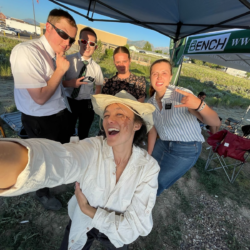
Yesterday, Yale School of the Environment student Li Murphy, a Western Resource Fellow with the Ucross High Plains Stewardship Initiative, published an op-ed in The Salt Lake Tribune calling for a rethinking of how we name and relate to “Mormon crickets” in the American West. The piece explores the ecological, cultural, and political stakes of Read more about Op-Ed Published in the SL Tribune: Making the Case to Rename Mormon Crickets – Li Murphy[…]
Some Favorites from a Summer in the Field – Isabella Goodman
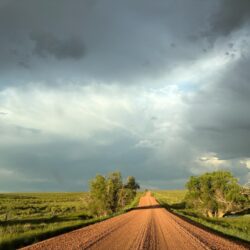
This past summer I drove from Saskatoon, Saskatchewan to Marfa, Texas. This wasn’t your typical summer road trip. This was a field work campaign where we sampled herbaceous biomass (grasses and forbs) and collected soil samples to estimate aboveground net primary production and radiation use efficiency along a latitudinal temperature gradient. During this field Read more about Some Favorites from a Summer in the Field – Isabella Goodman[…]
A Legal System for Everyone: My Summer at Cottonwood Environmental Law Center – Bella Amell
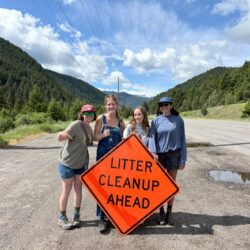
As the first in my family to attend college, the legal system is admittedly very intimidating to me. Even considering going to law school feels like a massive undertaking. An undertaking that I, as someone born and raised in a small town, feel massively underprepared to take on. The pre-law students I know are mostly Read more about A Legal System for Everyone: My Summer at Cottonwood Environmental Law Center – Bella Amell[…]
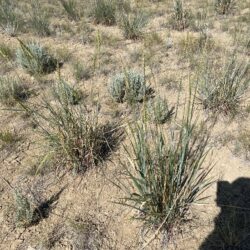
Clipping My Way Through the Sagebrush Sea – Jianing Tian
Fieldwork always sounds romantic and serene from the outside: wide open skies, fresh air and soft breezes, fragrant sagebrush, and a mischievous choir of tiny creatures. But when your main task is clipping grasses and forbs for biomass, the reality is often more like an endurance activity, especially when you’re up against certain “special” plants Read more about Clipping My Way Through the Sagebrush Sea – Jianing Tian[…]
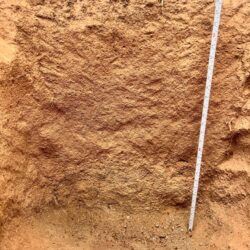
From the Field to the Lab Furnace: Wrapping Up Soil Sampling in Wyoming – Myroslav Bur
As summer winds down, so does the fieldwork portion of my research in Pinedale, Wyoming. The past weeks have been filled with long days in the sun, navigating sagebrush, and collecting soil samples from gas fracking sites—but the lab work is just beginning. With field sampling complete, I’m now turning to the lab phase at Read more about From the Field to the Lab Furnace: Wrapping Up Soil Sampling in Wyoming – Myroslav Bur[…]
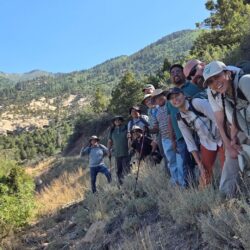
Reciprocity & the Research Process – Carine Rofshus
Pueblo pottery signifies a reciprocal relationship between humans and clay, which is considered a sacred gift from Mother Earth. Before gathering clay, permission is asked, a prayer, and an offering are given to the Earth. Nuch-ochu-quijo, Unripe-earth-old-lady, then joins the potter in the creation process to form a new being, who takes its form as Read more about Reciprocity & the Research Process – Carine Rofshus[…]